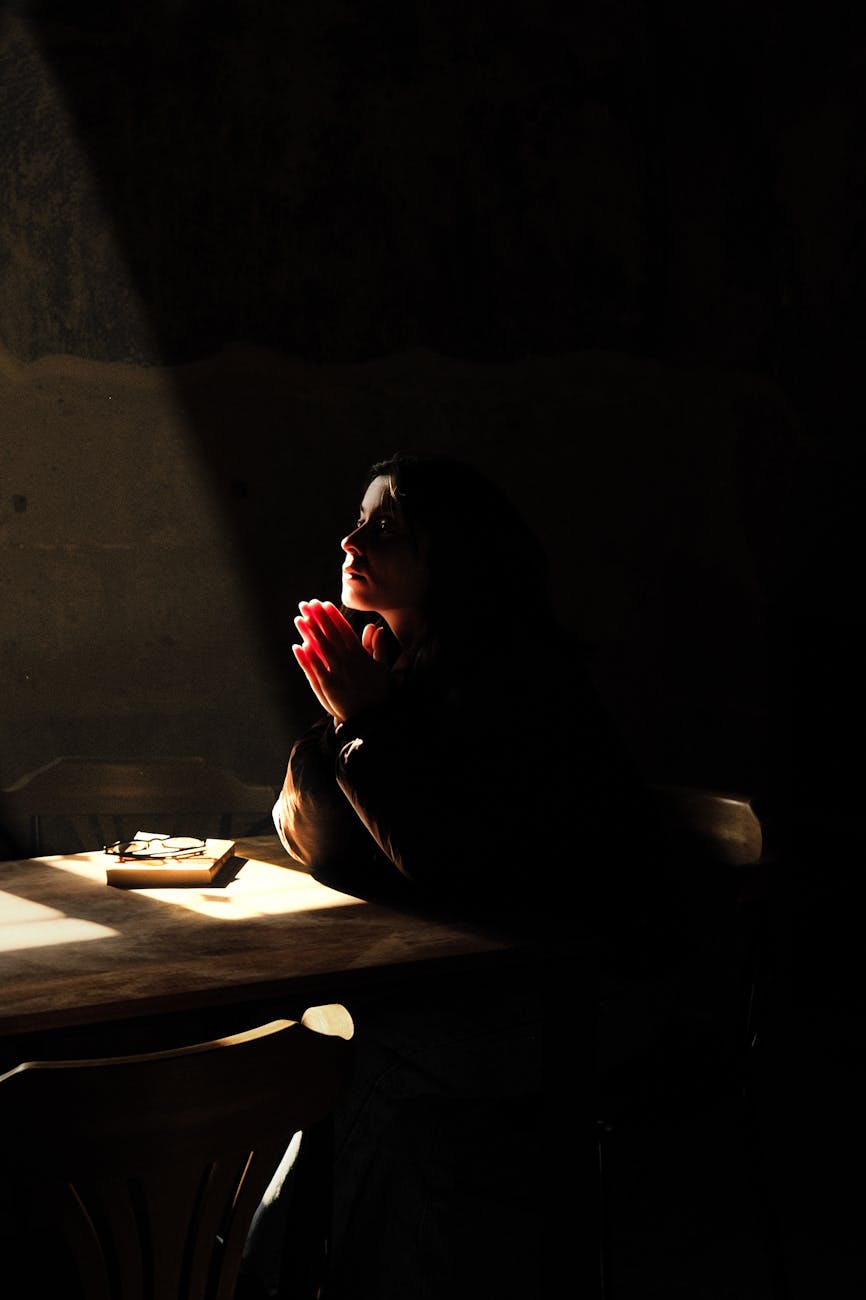
There was a season where I had been carrying so much pain for so long that I couldn’t even tell you what was hurting anymore. It had all blended together. The losses. The disappointments. The things people did. The things I did. The prayers that didn’t get answered the way I needed. The seasons that took more from me than I had to give.
And what I did with all of that — I put it in a room. I closed the door. And I told myself I was fine.
I wasn’t fine. I was bleeding out behind a closed door.
But it felt safer to keep it locked away than to actually go in there and look at it. Because looking at it meant feeling it again. And I didn’t think I had the strength to feel it again.
Some of you are sitting in that exact same place right now. You’ve been carrying things that nobody else knows about. Things you don’t even let yourself think about. Things you’ve sealed up so tight that you genuinely believe they’re fine where they are.
They’re not fine. They’re leaking. And today — with permission — we’re going in.
The rooms we don’t enter
Most of us have rooms inside ourselves we don’t go into. Not physical rooms — places inside our hearts where we’ve stored things we didn’t know how to deal with. Pain. Fear. Shame. The seasons we never finished processing.
We close the doors. We keep walking. We tell ourselves it’s fine.
But whatever you locked away didn’t go away just because you stopped looking at it. It leaks. It seeps out under the door and into everything else. It gets into how you see people. How you see yourself. How you see God.
If you’ve read other posts here, you know I think of this as a hallway. There’s a door at the end of it — God’s door, the one He’s been knocking on. Revelation 3:20. *Here I am! I stand at the door and knock.* And the rooms inside us, behind us, are the things standing between us and that door.
Today we’re going into one of the heaviest rooms. The one most people will never enter. The one that’s been quietly running everything for years.
This is the room where it hurts.
This door is heavy. The wood is darker. The handle is cold. There are scratch marks on the outside — like somebody tried to claw their way out at some point. Like somebody tried to push through it from the inside.
This is the room you’ve been avoiding the longest.
And I want to be honest with you. This door is harder to open than the others. Because what’s in here isn’t just dust. It’s blood. It’s real. It’s sharp. It’s the stuff you’ve been protecting yourself from for years.
But we’re going in anyway. Slowly. Together. And the Holy Spirit is in the hallway with us.
What’s in the room
Step inside. Let your eyes adjust. The first thing you notice is that this room is full. Fuller than any other room you’ve walked through.
There’s grief in this room. Maybe somebody died. Maybe somebody you loved is gone and the world keeps moving and you’re still sitting with their absence. Maybe it has been years and people stopped asking how you’re doing about it a long time ago. But it’s still in this room. Sitting in the corner. Waiting for you to acknowledge it.
Or maybe the grief in your room isn’t about a person. Maybe it’s about a life. The one you thought you’d be living. The marriage you thought you’d still have. The child you thought you’d have by now. The career that was supposed to happen. The version of yourself you thought you’d be at this age. You’re grieving the life that didn’t get to be — and nobody talks about that kind of grief, so you’ve been carrying it alone.
There’s anxiety in this room. Some of you have been waking up at 3 a.m. for years. Your chest gets tight. Your mind races. You’ve learned to function with it. You’ve learned to push through the day on adrenaline and fumes. But on the inside, the anxiety is running everything. It decides what you eat. What you watch. Who you let close. What you avoid. It’s the loudest voice in this room. And the worst part is the guilt on top of it — because you feel like a person of faith shouldn’t be this afraid.
There’s trauma in this room. Some of you know exactly what I mean. You don’t need me to define it. You’ve been managing the aftermath of something that happened to you for years. Maybe decades. Maybe somebody hurt you in ways you’ve never said out loud. Maybe somebody who was supposed to protect you didn’t. Maybe you survived something that left a mark that nobody else can see. And you’ve been doing what you had to do. Holding it together. Functioning. Pretending. But the trauma is still in this room. And it’s been making decisions for you. About who you trust. About how you love. About whether you let anyone in.
There’s the questions in this room. The ones you don’t say out loud because you’re scared they make you a bad Christian. Where was God when that happened? If He could have stopped it, why didn’t He? If He saw me hurting, why was He silent? Why did He answer her prayer and not mine? Those questions have been sitting in this room. And every time you sit with God, they whisper. And you push them down because you don’t want to seem ungrateful. So you keep them sealed up in here. And they never get answered — because they never get asked.
And there’s the loneliness. The deep kind. Not the kind that goes away when somebody texts you back. The kind where you’re in a room full of people and still feel completely alone, because nobody actually knows what’s going on inside you. Nobody has ever been let into this room.
This room is heavy not because there’s something wrong with you for what’s in it. It’s heavy because you’ve been carrying it alone.
Why this room stayed sealed
Let me tell you why this room has stayed sealed for so long. Because the world has not been kind to people in pain.
Somewhere along the way you learned that people don’t actually want your honest answer when they ask how you’re doing. They want the short version. The polite one. The one that doesn’t make them uncomfortable.
You learned that grief has a timeline and you’d better be over it on schedule. You learned that anxiety is something to apologize for. That trauma is something to keep private. That hard questions about God are dangerous to ask.
So you kept it all in this room. You sealed it up. And you got really good at smiling.
And maybe — and this one is hard to say — the church didn’t help. Some of you brought your pain to people of faith and got told to pray harder. To have more faith. To stop dwelling. To trust God and move on. As if pain is a faith problem. As if grief is a sign you don’t believe enough.
That is not the gospel. That is not Jesus.
John 11:33–35 “When Jesus saw her weeping, and the Jews who had come along with her also weeping, he was deeply moved in spirit and troubled. “Where have you laid him?” he asked. “Come and see, Lord,” they replied. Jesus wept.”
Jesus wept. He stood at the grave of His friend and He cried. He didn’t skip the pain. He didn’t spiritualize it. He didn’t say ‘well at least he’s in a better place.’ He stood there and He felt it.
Jesus knew He was about to raise Lazarus from the dead. He knew the resurrection was three minutes away. And He still stopped to weep. Because pain is not a faith failure. Pain is what love feels like when something has been broken.
If Jesus wept — you can weep. If He stood in the pain of His friends — He will stand in yours.
Psalm 34:18 “The Lord is close to the brokenhearted and saves those who are crushed in spirit.”
Close to the brokenhearted. Not far away. Not waiting for you to get over it. Close. He moves toward the broken places. He has always moved toward the broken places.
How pain distorts how you see
Here’s something I’ve learned the hard way. You don’t see life as it is. You see life through whatever you’re carrying. Unprocessed pain becomes a lens — it colors everything else without you even noticing.
The pain in this room has been doing something to your lens that I want to name.
It has made you flinch when good things happen. Something starts going well and instead of leaning into it, you brace. Because you have learned that good doesn’t last. The pain in this room taught you that. So you can’t actually receive joy anymore. You just wait for it to be taken.
It has made you scared to hope. Real hope feels dangerous. Because hoping for something means you might not get it. And you’ve already been disappointed enough times. So you’ve learned to want things quietly. To never get your expectations too high.
It has made God feel suspicious instead of safe. Because the pain in this room happened on His watch. And even if you’ve never said it out loud, somewhere inside you, you’re still wondering why. And until that question gets a place to sit, your trust will keep limping.
Unprocessed pain doesn’t just stay where you put it. It bleeds into how you see the future. How you see God. How you see yourself.
Carrying it out
So you’re in the room. You’ve seen what’s in here. Maybe for the first time in years — you’ve named some of it.
And now there’s a question to sit with. Are you going to leave it in here? Or are you going to pick it up and carry it to Jesus?
I want to be careful with you. Because picking this up isn’t simple. The pain in this room has been a part of you for so long that letting Him touch it might feel like letting Him touch a wound that has never been looked at by anyone. And that’s exactly why you have to.
Matthew 11:28–30 “Come to me, all you who are weary and burdened, and I will give you rest. Take my yoke upon you and learn from me, for I am gentle and humble in heart, and you will find rest for your souls. For my yoke is easy and my burden is light.”
Weary and burdened. That’s you. The one carrying things you were never supposed to carry alone. He says — come. Bring it. Don’t fix it first. Don’t package it nicely. Don’t make it more presentable. Bring it as it is. And He says I am gentle. Not I will lecture you. Not I will tell you all the ways you should have handled it differently. He says I am gentle.
1 Peter 5:7 “Cast all your anxiety on him because he cares for you.”
He cares. That’s the reason. Not because you’ve earned it. Not because you’ve been faithful enough. He cares. That’s the whole basis.
If you can’t carry it
This is the room where you might not be able to do this alone. Where the weight is too much. Where the pain has been buried so long you don’t even know how to start describing it. Where the words don’t exist yet.
That’s exactly the place where the Holy Spirit does His best work.
Romans 8:26–27 “In the same way, the Spirit helps us in our weakness. We do not know what we ought to pray for, but the Spirit himself intercedes for us through wordless groans. And he who searches our hearts knows the mind of the Spirit, because the Spirit intercedes for God’s people in accordance with the will of God.”
Wordless groans. The Spirit speaks for you when there are no words.
Some of what’s in your room doesn’t have words. The pain is older than language. You don’t know how to pray about it. You don’t know what to ask for. You don’t know what you even want to say to God about it anymore.
That’s okay. The Spirit knows. He grabs the other end. He walks into this room with you. He puts His hands underneath the weight and He helps you carry it. He prays the prayer you can’t pray. He says the things you can’t say. And He brings what’s in this room straight to the Father.
So this is what it can look like. You don’t have to do it perfectly. You just have to say something like — Holy Spirit, this room is too heavy. I can’t carry it alone. Help me. Bring it to the Father with me. And He will. That’s scripture.
This week
Three small things. None of them are going to fix everything. They’re just going to start something.
Name one thing. Pick one thing in that room. The grief. The anxiety. The trauma. The question. And say it out loud to God. Not in a polished prayer. Just say it. ‘God, this is what hurts. This is what I’ve been carrying. I’m bringing it to You.’ Naming it doesn’t fix it. But it pulls it out of the dark.
Tell one safe person. This is hard. But isolation is what kept this room sealed. Pick somebody safe — a counselor, a trusted friend, a pastor who actually listens — and tell them one thing you’ve been carrying alone. Healing happens in community. The room stays heaviest when nobody else knows what’s in it. And if you’ve been struggling with anxiety or grief or trauma in a way that needs more than one conversation — please get help. A good Christian counselor is a gift from God. Going to therapy is not a lack of faith. It is faith in action.
Let yourself feel it without rushing to fix it. Most of us have spent so long avoiding the pain that when it surfaces, we immediately try to push it back down. This week, when something hurts — instead of distracting yourself, stop. Sit with it for sixty seconds. Tell God what you’re feeling. Let yourself actually feel it. Pain that’s acknowledged starts to move. Pain that’s avoided just stays.
One last thing
What happened to you was real. The pain you carry is real. Nobody gets to minimize that.
You are not weak for hurting. You are not faithless for grieving. You are not broken beyond repair.
God is not waiting for you to get over it. He is sitting with you in it. He has been sitting with you in it the whole time — even when you couldn’t feel Him there.
The pain in your room does not disqualify you. It does not make you less loved. It does not change one single thing about who you are to Him.
And He is close to the brokenhearted. He is closest to the most painful room in your story. That’s where He lives.
Reflect — What’s in the room I’ve been avoiding the longest — and what would it feel like to let Jesus into it with me?
Verse — “The Lord is close to the brokenhearted and saves those who are crushed in spirit.” — Psalm 34:18, NIV
Affirm — I do not have to carry this alone anymore. He is close to me in the pain, and He is bringing me through it.
Room 0 — A threshold of peace, rooted in Christ. Come as you are.


Leave a comment